
Water for the Dry Season: A Game Changer for Ekiriyankumbura Village
Access to an agro-well is crucial for the farmers of Ekiriyankumbura village, and addressing this need is the focus of our project there in Summer 2025. Indeed, the introduction of agro-wells enables farmers to enhance crop rotation and stabilize their harvests during the dry season by providing irrigation water during dry spells, a previously unattainable goal. With an increase in agricultural output, farmers are positioned to achieve profitability from their farming activities. Access to quality water is a critical determinant of public health, making effective water management essential to ensure both accessibility and quality, especially in the context of climate change and diminishing water resources.
The Villages of Badulla District
Badulla District is an administrative district of Uva Province in Sri Lanka, with an area of 2,861 km2. Its capital is Badulla, located southeast of Kandy, on the Badulu Oya river.
Badulla district is located in the mountainous region of Sri Lanka. Its population of 895,000 inhabitants is made up of 48% men and 52% women, 72.6% of the population being rural. It is a multiethnic, multicultural and multireligious region.
According to the Sri Lanka National Multidimensional Poverty Index (NMPI), more 1/3 of Badulla’s population lives in poverty. It is the second poorest district of Sri Lanka, just after Nuwara-Eliya. The economy of the district depends mainly on the cultivation of tea and other agricultural productions. The women of villages face many challenges as few of them have fixed earning employment, and their husbands are mostly low-income farmers.
Agricultural production does not allow families to obtain a regular income throughout the year despite important seasonal productions.
Issues with Available water sources and common agricultural practices
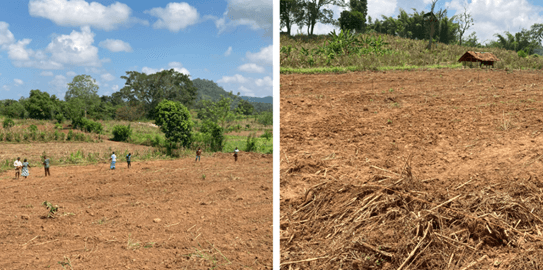
- Farmers in the region primarily rely on rainwater that falls during the Northeast monsoon as their main source of water for cultivation. This seasonal rainfall plays a critical role in sustaining agricultural activities, especially during the primary cultivation period.
- In addition to rainwater, there may be small irrigation canals located a few kilometers away from farmlands. However, the availability and accessibility of water from the canals remains inconsistent due to seasonal variations and limited infrastructure.
- As such, there is an urgent need to improve irrigation systems and establish more reliable and sustainable water sources to ensure year-round cultivation and reduce dependency on unpredictable rainfall.
- Due to this challenge, most farmers are only able to cultivate during the rainy season, missing the opportunity to grow crops in the dry season. This not only limits their annual income but also affects their contribution to the national economy and their overall well-being.
- Many farmers, accustomed to single-crop (monoculture) farming, are unable to shift to year-round cultivation primarily due to the absence of proper irrigation systems, and knowledge. Addressing this issue is crucial for enhancing agricultural productivity, ensuring food security, and uplifting rural livelihoods.
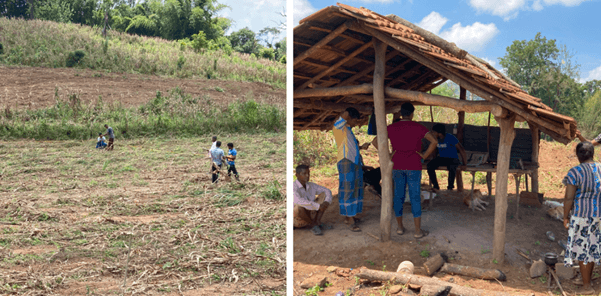
Sustainable water access is essential for improving the quality of life on farms © MONLAR
Our Project for Ekiriyankumbura Village
The introduction of agro-wells enables farmers to enhance crop rotation and stabilize their harvests during the dry season by providing irrigation water during dry spells, a previously unattainable goal. With an increase in agricultural output, farmers are positioned to achieve profitability from their farming activities. Access to quality water is a critical determinant of public health, making effective water management essential to ensure both accessibility and quality, especially in the context of climate change and diminishing water resources.
The farmers of Ekiriyankumbura village are well-positioned to benefit from such a solution. The construction of an agro-well will provide reliable access to water during droughts and the dry season, significantly enhancing their resilience to climate variability. In addition, they will receive training in agroecological farming practices—methods that utilize locally available resources to increase productivity while minimizing environmental degradation. This approach offers a sustainable alternative to conventional, chemical-intensive agriculture, promoting both ecological balance and long-term food security.
This project will be done in partnership with MONLAR, The Movement For Land and Agricultural Reform in Sri Lanka.
Project Details
Our goals are the following:
- Enhance Sustainable Water Access for Agriculture: Improve the availability and management of water resources for agricultural purposes, ensuring reliable and sustainable access to water for smallholder farmers.
- Mitigate water quality and Accessibility of Drinking Water: Address the challenges of distance by increasing the availability of clean and safe drinking water for rural communities.
- Promote Agroecology as a Water-Smart, Sustainable Agricultural Practice that emphasizes the use of water-efficient techniques and locally available resources to boost productivity. This approach not only conserves water but also reduces environmental degradation and minimizes health risks associated with chemical-intensive farming.
Our objectives are as below:
- Address water scarcity during dry seasons affecting farmers so they are able to practice stable and mixed cropping.
- Provide a sustainable solution by constructing a collective agro well.
- Support farmers to cultivate during the rainy and dry seasons.
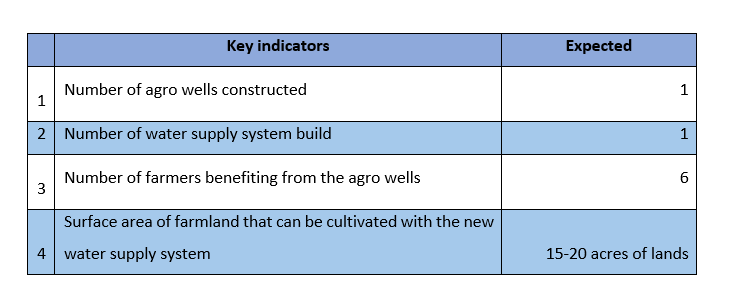
- Ensure reliable water access for 15 to 20 acres of cultivated land.
- Improve agricultural productivity and farmer resilience through year-round cultivation.
- Promote environmentally friendly and sustainable farming practices with better resource management, with agroecology training.
Geography:
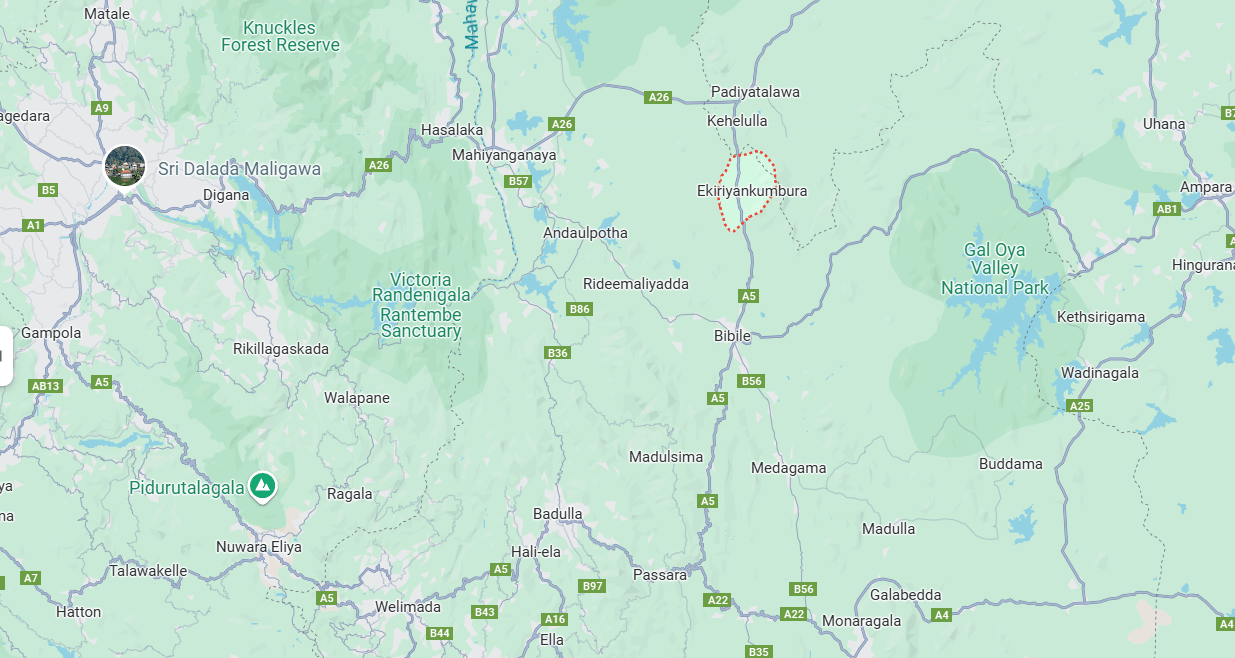
The identified issues are in Uva Province, within the Badulla District, specifically in the Rideemaliyadda Divisional Secretariat Division, in the rural village of Ekiriyankumbura.
Target group:
This initiative focuses on supporting six farming families who have faced long-standing difficulties in accessing water for their cultivation needs.
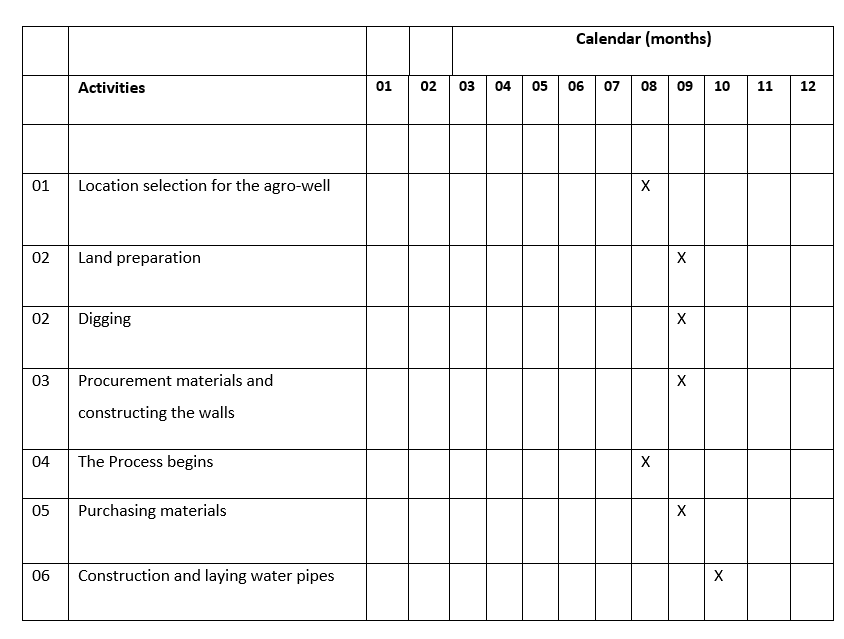
Project Schedule:
Our project will span from July to September 2025.
Project Key Performance Indicators
Project Budget
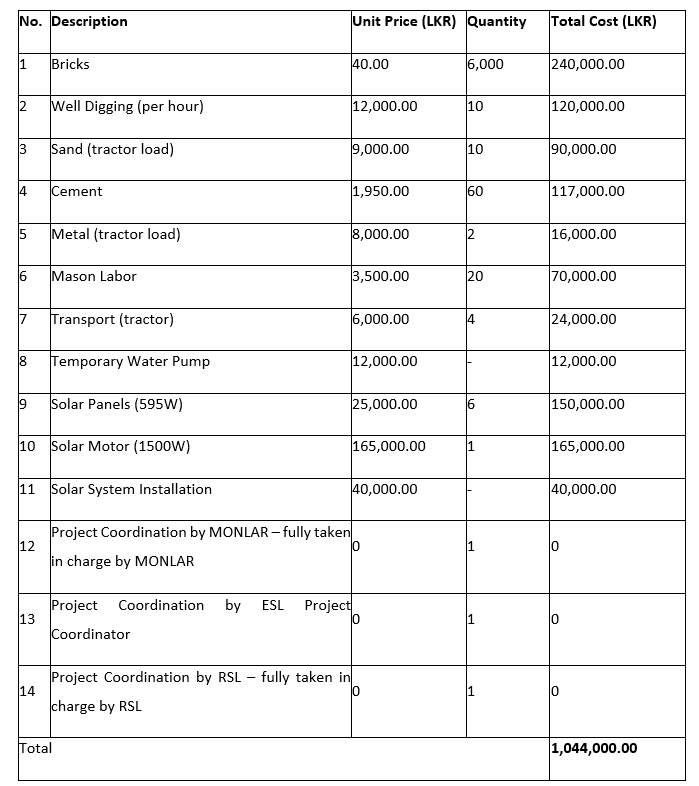
The total budget necessary for the project is LKR 1 044 000. It is fully financed by Sri Lankan Tech Company EConsulate.

Project Team
Renaissance Sri Lanka:
- 1 Project Manager in France,
- 1 Project Coordinator in Sri Lanka (Empowered Sri Lanka),
- 1 Project Assistant & Financial Officer
- Volunteers in France and Sri Lanka
MONLAR:
- 1 Project Coordinator
- 1 Project Assistant
- 1 Financial Officer
- Volunteers in Sri Lanka
References
Sri Lankan Department of Census and Statistics. “Multidimensional Poverty in Sri Lanka”. Accessed August 2022. https://ophi.org.uk/wp-content/uploads/MPI_in_Sri_Lanka_briefing_2021.pdf
Munas M Muzrif, Dinusha Perera, Kumudu Wijewardena, Berit Schei, Katarina Swahnberg. “Domestic violence: a cross-sectional study among pregnant women in different regions of Sri Lanka”. National Library of Medicine. Accessed August 2022. https://pubmed.ncbi.nlm.nih.gov/29463585/
City Population. “BADULLA District in Sri Lanka”. Accessed August 2022. https://www.citypopulation.de/en/srilanka/prov/admin/uva/81__badulla/
Britannica. “Badulla Sri Lanka”. Accessed August 2022. https://www.britannica.com/place/Badulla
Wikipedia. “Badulla District”. Accessed August 2022.https://en.wikipedia.org/wiki/Badulla_District